
How to Choose Skincare Ingredients for Your Skin Naturally
Finding skincare that truly fits your needs can feel frustrating when ingredient lists are confusing and every label claims to be natural. For eco-conscious women demanding cruelty-free transparency, building a skincare routine starts with understanding your unique skin concerns and how different ingredients actually interact with your skin. This guide uncovers clear steps for evaluating your skin, researching ingredients, and confidently choosing products that prioritize both your health and values.
Table of Contents
- Step 1: Assess Your Unique Skin Concerns
- Step 2: Research Ingredient Benefits And Risks
- Step 3: Evaluate Product Labels For Transparency
- Step 4: Compare Formulations For Efficacy And Safety
- Step 5: Test Products And Monitor Skin Response
Quick Summary
| Key Insight | Explanation |
|---|---|
| 1. Understand Your Skin Type | Assess your skin through visual, sensitivity, and hydration evaluations for personalized skincare. |
| 2. Research Ingredients Thoroughly | Investigate skin care ingredients for benefits, origins, and safety profiles to avoid adverse reactions. |
| 3. Analyze Product Labels | Decode labels for transparency, checking ingredient lists and allergen warnings to make informed choices. |
| 4. Compare Formulations Wisely | Evaluate product effectiveness and safety by comparing active ingredients, formulation types, and clinical evidence. |
| 5. Conduct Thorough Product Testing | Implement patch tests and track skin responses to safely introduce new products while monitoring for reactions. |
Step 1: Assess your unique skin concerns
Understanding your specific skin profile is the foundational first step in creating an effective natural skincare routine. By carefully evaluating skin characteristics, you’ll gain critical insights into selecting the most appropriate ingredients for your individual needs.
A comprehensive skin assessment involves multiple strategic approaches:
- Visual Examination: Observe your skin’s texture, color, and visible characteristics
- Sensitivity Analysis: Determine how your skin responds to environmental changes
- Hydration Evaluation: Check skin’s moisture levels and resilience
- Genetic and Lifestyle Factors: Consider inherited traits and daily environmental exposures
Professional skin classification systems like the Fitzpatrick and Baumann scales offer scientific frameworks for precise skin typing. These methodologies help categorize your unique dermatological profile by examining critical factors such as:
Here’s a quick reference for major skin classification systems:
| System Name | Main Focus | Typical Use | Key Insight |
|---|---|---|---|
| Fitzpatrick Scale | Measures sun response | Dermatology clinics | Predicts UV sensitivity |
| Baumann Scale | Evaluates multiple skin traits | Customized skincare | Guides ingredient selection |
| Glogau Scale | Assesses aging signs | Cosmetic procedures | Recommends anti-aging care |
- Pigmentation intensity
- Sensitivity thresholds
- Moisture retention capabilities
- Textural variations
Understanding your specific skin type transforms generic skincare into a personalized, targeted approach.
Pro tip: Keep a weekly skin journal documenting changes, reactions, and environmental influences to develop deeper insights into your skin’s unique characteristics.
Step 2: Research ingredient benefits and risks
Delving into skincare ingredient research is crucial for creating a safe and effective natural skincare routine. Natural ingredient safety assessments require careful evaluation of potential benefits and potential risks to ensure optimal skin health.
When researching skincare ingredients, focus on these critical areas:
- Scientific Validation: Look for peer-reviewed studies and clinical research
- Ingredient Origin: Understand the source and extraction methods
- Potential Interactions: Identify how ingredients might interact with your specific skin type
- Safety Profile: Examine potential allergens and sensitization risks
Key considerations for natural ingredient selection include:
- Examining molecular structure and skin penetration capabilities
- Analyzing potential short-term and long-term effects
- Comparing natural versus synthetic ingredient performance
- Checking for potential cross-reactivity with other skincare components
Not all natural ingredients are inherently safe, and not all synthetic ingredients are harmful - context and individual skin response matter most.
Comparing natural ingredients like green tea, aloe vera, and tea tree oil reveals unique benefits. These components typically offer holistic skin advantages, with gentler interactions compared to more aggressive synthetic alternatives.
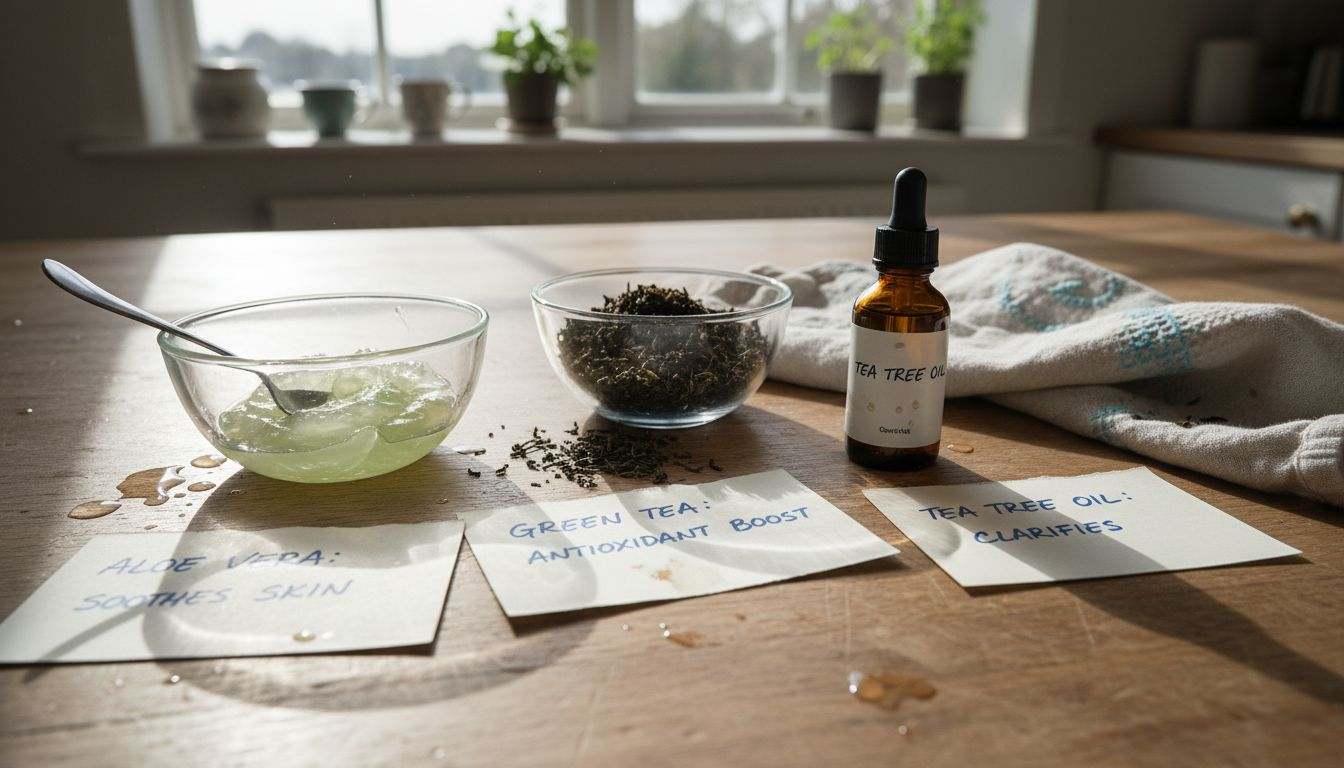
Here’s how top natural skincare ingredients compare:
| Ingredient | Main Benefit | Common Risks | Best Skin Types |
|---|---|---|---|
| Green Tea | Antioxidant, soothing | Rare irritation | Sensitive, oily, aging |
| Aloe Vera | Calming, hydrates | Rare allergic reactions | Dry, irritated, normal |
| Tea Tree Oil | Purifying, acne care | More frequent sensitivity | Oily, acne-prone |
Pro tip: Cross-reference ingredient information from multiple reputable scientific sources and consult with a dermatologist to ensure comprehensive understanding of potential skin interactions.
Step 3: Evaluate product labels for transparency
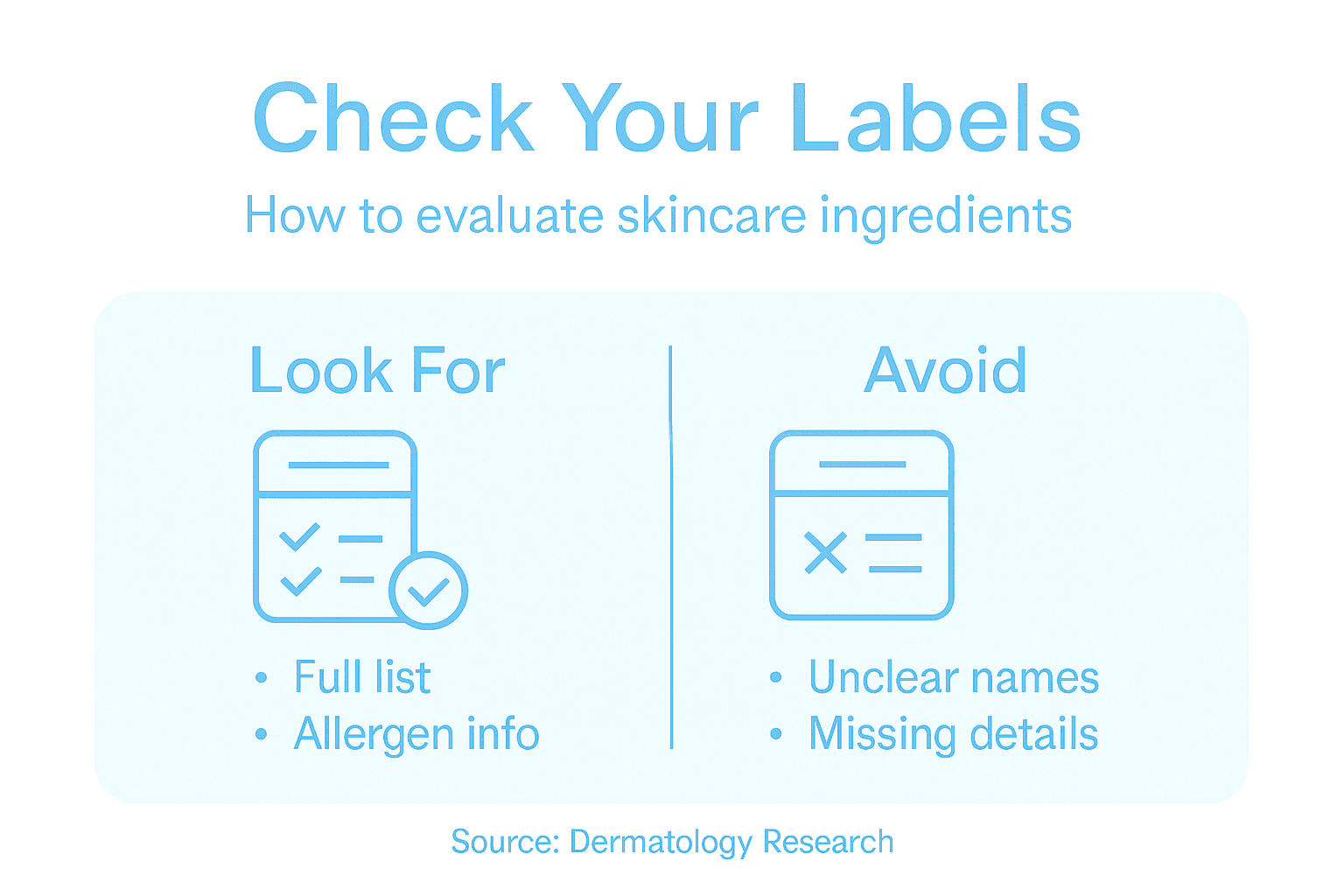
Decoding skincare product labels is a critical skill for making informed natural skincare choices. Cosmetic labeling regulations provide crucial guidelines to help consumers understand exactly what they’re applying to their skin.
When evaluating product labels, focus on these essential components:
- Ingredient List: Examine ingredients listed in descending order of concentration
- Allergen Declarations: Look for potential sensitivity triggers
- Manufacturer Information: Verify brand contact details and origin
- Expiration Dates: Check product shelf life and recommended usage period
Key transparency indicators include:
- Complete and legible ingredient listings
- Clear contact information for the manufacturer
- Precise net content measurements
- Specific warning statements or usage instructions
Transparent labeling empowers consumers to make informed skincare decisions and understand exactly what they’re applying to their body.
Beyond basic information, advanced label evaluation involves understanding ingredient nomenclature and recognizing potential hidden additives. Pay special attention to terms like “fragrance” which can mask multiple undisclosed components.
Pro tip: Use smartphone apps that scan ingredient lists and provide detailed breakdowns of potential skin interactions and safety profiles.
Step 4: Compare formulations for efficacy and safety
Comparing skincare formulations requires a strategic approach to understanding their potential benefits and limitations. Systematic reviews of skincare ingredients reveal critical insights into product performance and safety that go beyond marketing claims.
When comparing skincare formulations, evaluate these key dimensions:
- Active Ingredient Concentration: Assess the percentage and potency of key components
- Formulation Type: Compare delivery methods like gels, creams, and serums
- Stability Parameters: Check ingredient preservation and potential degradation
- Clinical Evidence: Review scientific studies supporting ingredient effectiveness
Critical evaluation strategies include:
- Examining peer-reviewed research on specific ingredients
- Understanding potential synergistic or antagonistic ingredient interactions
- Analyzing long-term safety data
- Comparing performance across different skin types
Not all high-performing ingredients work identically for every individual - personalization is key.
Focus on evidence-based ingredients with proven track records, such as retinol, vitamin C, and hyaluronic acid. These components have substantial scientific support for their skincare benefits.
Pro tip: Create a personal spreadsheet tracking ingredient performance, noting how different formulations impact your specific skin concerns over time.
Step 5: Test products and monitor skin response
Testing new skincare products requires a methodical and cautious approach to protect your skin’s health and sensitivity. Cosmetic product testing guidelines emphasize the importance of systematic evaluation and individual skin response monitoring.
Implement a structured approach to product testing:
- Patch Test: Apply a small amount of product on a discrete skin area
- Gradual Introduction: Start with minimal application frequency
- Observation Period: Monitor skin reactions for 24-48 hours
- Documentation: Record any changes in skin texture, appearance, or sensation
Critical testing protocols include:
- Selecting an inconspicuous test area like inner forearm
- Using a quarter-sized amount for initial application
- Waiting 48 hours before full-face or broader application
- Checking for redness, itching, or unusual skin reactions
Individual skin responses vary dramatically - what works for one person might not work for another.
Skin Response Tracking involves carefully documenting subtle changes. Look for indicators like hydration levels, texture modifications, and sensitivity shifts. Unexpected reactions warrant immediate product discontinuation.
Pro tip: Take clear, well-lit photos of your test patch area before and after product application to create a visual record of potential skin changes.
Discover Skincare Crafted to Match Your Unique Skin Needs
Choosing natural skincare ingredients can feel overwhelming with all the factors like skin type assessment, ingredient benefits, and product transparency to consider. If you want to truly nurture your skin with formulas that respect your individual profile and sensitivity, Passé Daisy offers a thoughtful solution. Our cruelty-free products are designed with both efficacy and elegance in mind ensuring every ingredient supports radiant healthy skin tailored to you.
Explore our carefully curated collection where science meets nature to help you build a personalized skincare routine. Start your journey by browsing All Products - Skincare & Beauty | Passé Daisy and experience why so many trust Passé Daisy® for gentle yet powerful skincare. Visit Passé Daisy today and transform your skincare routine with formulas that truly understand your skin.
Frequently Asked Questions
How do I assess my unique skin concerns before choosing skincare ingredients?
Start by visually examining your skin’s texture, color, and sensitivity, then consider factors like hydration levels and your lifestyle. Keep a weekly skin journal to track these characteristics and identify specific needs over time.
What should I look for when researching the benefits and risks of skincare ingredients?
Focus on scientific validation from peer-reviewed studies, the ingredient’s origin, and potential interactions with your specific skin type. Gather information from multiple reputable sources to ensure a comprehensive understanding of each ingredient’s safety and efficacy.
How can I evaluate skincare product labels for transparency?
Look for complete ingredient lists, allergen declarations, and clear manufacturer information on product labels. Make sure to check expiration dates and review any warning statements to make informed choices about what you apply to your skin.
What factors should I compare when evaluating different skincare formulations?
Examine the active ingredient concentration, formulation type (like creams or serums), and available clinical evidence supporting their effectiveness. Track performance across different skin types to find formulations that work best for you over time.
How should I go about testing new skincare products on my skin?
Begin with a patch test by applying a small amount of the product on a discreet area of skin and monitor for 24-48 hours. Document any changes, such as redness or irritation, to gauge its compatibility with your skin before full application.
Recommended
Let customers speak for us
Their packaging is adorable and I’m literally obsessed with their vitamin c moisturizer.
One of my faves! Not too heavy & leaves my skin glowy/bright. The consistency wears perfect under makeup.

Absolutely love this serum! After a few weeks of consistent use, my lashes became longer and fuller, and my brows look much healthier. It’s gentle, easy to apply, and actually delivers visible results. Highly recommend! 💛
Absolutely love this serum! After a few weeks of consistent use, my lashes became longer and fuller, and my brows look much healthier. It’s gentle, easy to apply, and actually delivers visible results. Highly recommend! 💛

I’ve really enjoyed using this serum. It was easy to incorporate into my routine, and my lashes look healthier and fuller. I’m very happy with the results and would recommend it!
I absolutely LOVE this serum! After having a terrible accident with an eyelash curler that ripped out a huge chunk of my lashes, this stuff truly helped grow my lashes back longer and fuller! It is also does not irritate my eyes at all which is a huge plus! Totally worth it!

I’ve been using this serum for a little bit over a week and I have nothing but good things to say. There has been no irritation to my eyelids upon application and after, and I see a change in the fullness of my lashes already. I highly recommend.
I’ve been really enjoying this lash serum! It’s lightweight, easy to apply, and has become such a simple part of my nightly routine. I also love that it doesn’t feel sticky or heavy after application. The packaging is beautiful, and the overall experience feels really luxurious. I’m excited to keep using it and can’t wait to see even more results over time. Definitely recommend if you’re looking to support healthier-looking lashes!
I’ve been really enjoying this lash serum! It’s lightweight, easy to apply, and has become such a simple part of my nightly routine. I also love that it doesn’t feel sticky or heavy after application. The packaging is beautiful, and the overall experience feels really luxurious. I’m excited to keep using it and can’t wait to see even more results over time. Definitely recommend if you’re looking to support healthier-looking lashes!
I am absolutely in love with the Celestial Age-Defy Peptide Serum! Finding an anti-aging product that actually delivers visible results can be a challenge, but this serum is incredible. After just two weeks of using it morning and evening, I can already see a wonderful difference. My skin feels noticeably smoother, firmer, and deeply hydrated. It does an amazing job at softening fine lines and giving the skin a healthy, youthful glow. The texture is lightweight, absorbs beautifully, and leaves the skin feeling great. Highly recommend!

I’ve been using the Multi Peptide Eyelash Serum as part of my routine, and one of the things I like most is that it’s prostaglandin-free, vegan, and cruelty-free. The applicator is very precise, making it easy to apply to both my lashes and brows. So far, I’ve really enjoyed using it and I’m looking forward to seeing my results with continued use. Overall, it’s been a great addition to my beauty routine.
Just started using this serum and I cannot say enough good things about it. It’s so easy to add to my daily routine and really helps extenuate my natural features. Will be purchasing again!! 5 stars easy!!