
How to Use Serums for Healthy, Radiant Skin Results
Finding the right cruelty-free serum can feel overwhelming when every bottle promises healthier, more radiant skin. For women striving to see genuine results without irritation, understanding your skin type is the first step. By matching serums to both your unique concerns and the best active ingredients, you set the stage for noticeable improvements. Discover how a smart, personalized approach makes your routine more effective, delivering visible results that align with your skin’s real needs.
Table of Contents
- Step 1: Assess Your Skin and Choose the Right Serum
- Step 2: Prepare Your Face for Optimal Absorption
- Step 3: Apply Serum Using Proper Technique
- Step 4: Evaluate Results and Adjust Routine
Quick Summary
| Essential Insight | Explanation |
|---|---|
| 1. Assess Your Skin Type First | Examine your skin in natural light to identify its type and specific concerns, ensuring you choose the right serum for your needs. |
| 2. Prepare Skin Before Application | Cleanse and slightly dampen your skin prior to serum application to enhance absorption and effectiveness of active ingredients. |
| 3. Use Proper Application Technique | Apply serum using gentle patting motions with your fingertips for optimal absorption and to prevent skin irritation. |
| 4. Track Your Skin’s Response | Monitor improvements over 4-6 weeks and note any irritations, adjusting frequency or product as needed for best results. |
| 5. Be Patient and Make Adjustments | Allow time for serums to work, and if progress is slow or irritation occurs, consider modifying usage or changing products. |
Step 1: Assess Your Skin and Choose the Right Serum
Knowing your skin type and identifying your specific concerns is the foundation for selecting a serum that actually works for you. This step takes just a few minutes but makes all the difference in your results.
Start by examining your skin honestly. Look at your face in natural light using a mirror, checking for oiliness, dryness, sensitivity, or combination patterns. Notice where you experience tightness, shine, or irritation throughout the day. Take time to observe how your skin behaves after cleansing—does it feel tight? Does it become shiny within hours?
Next, identify your specific skin concerns. Common issues include fine lines, dark spots, acne, uneven texture, dullness, or sensitivity. You might have one primary concern or multiple overlapping ones. The more specific you are, the easier it becomes to find a serum with the right active ingredients.
When you’re ready to choose, look for serums matched to both your skin type and concerns:
- Oily or acne-prone skin: Serums with niacinamide help regulate oil and calm irritation
- Dry or sensitive skin: Hydrating formulas with botanical extracts and peptides provide comfort
- Dull or aging skin: Vitamin C and other brightening ingredients target radiance and firmness
- Combination skin: Lightweight, non-comedogenic formulas work across different zones
Understanding the active ingredients in serums like vitamin C or niacinamide helps you match them to your unique needs. What works brilliantly for your friend might not suit your skin’s chemistry—and that’s completely normal. Your serum should address your concerns without causing irritation or disruption.
Here’s a quick reference guide to common serum ingredients and their targeted benefits:
| Active Ingredient | Main Benefit | Best For | Considerations |
|---|---|---|---|
| Vitamin C | Brightens and firms skin | Dull or aging skin | Use in morning, can cause tingling |
| Niacinamide | Reduces oil and calms skin | Oily, acne-prone or sensitive skin | Helps reduce redness and pores |
| Hyaluronic Acid | Intense hydration | Dry, dehydrated skin | Works well under moisturizer |
| Peptides | Promotes firmness | Aging or sensitive skin | Good for barrier repair |
| Botanical Extracts | Soothes irritation | Sensitive or reactive skin | Choose fragrance-free for less risk |
The right serum matches both your skin type and your specific concerns, not just one or the other.
Consider starting with a single serum if you’re new to these products. Once you’ve used it consistently for 4-6 weeks, you’ll understand how your skin responds and can adjust if needed. Layer serums only after you’ve confirmed each one works independently for your skin.
Pro tip: Keep a simple journal for one week before buying a serum, noting where your skin feels tight, oily, or irritated. This real-world snapshot is more accurate than guessing, and it gives you the clarity to choose a serum that targets your actual needs rather than perceived ones.
Step 2: Prepare Your Face for Optimal Absorption
Your serum can only work as well as your skin allows it to penetrate. Preparation is what transforms a good serum into a genuinely transformative product for your complexion.
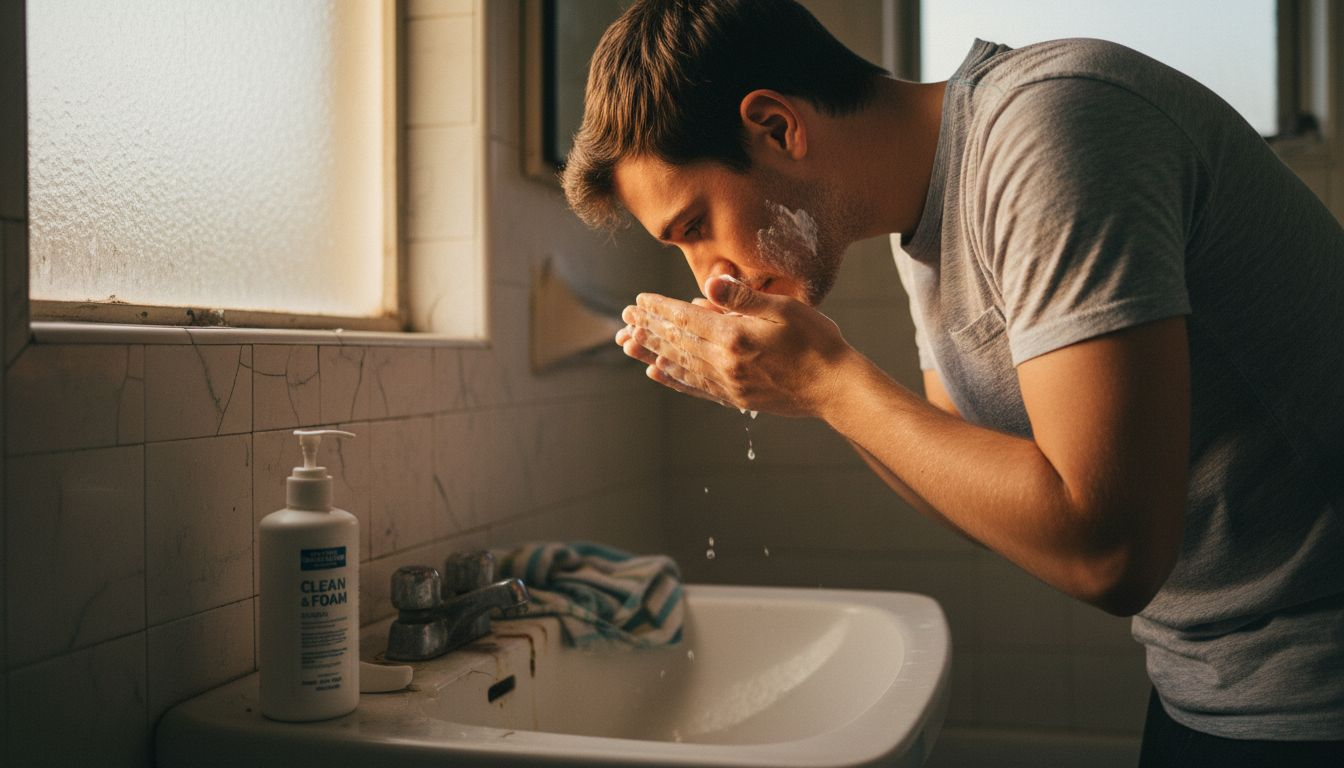
Start with gentle cleansing using a fragrance-free cleanser that doesn’t strip your skin. Remove all dirt, makeup, and impurities without leaving your skin feeling tight or uncomfortable. This foundation is non-negotiable—serums cannot penetrate through layers of oil or residue.
After cleansing, consider whether your skin needs exfoliation. Chemical exfoliants are gentler than physical scrubs and help remove dead skin cells without disrupting your skin barrier. However, avoid overusing exfoliants, as excess exfoliation can damage the protective barrier your skin needs. Most people benefit from exfoliating 1-3 times per week, depending on skin sensitivity.
Here’s the critical step many people miss: leave your skin slightly damp before applying serum. Pat your face gently with a clean towel, leaving a bit of moisture on the surface. Damp skin absorbs serums more effectively than completely dry skin because water helps active ingredients penetrate deeper into the epidermis.
Follow this order for optimal results:
- Cleanse thoroughly
- Exfoliate if needed (1-3 times weekly)
- Pat skin almost dry, leaving slight dampness
- Apply serum immediately while skin is still moist
- Follow with your lightweight moisturizer
The proper order of skincare products matters because layering from lightest to heaviest allows each product to absorb fully. Never apply heavy creams before serums, as they create a barrier that blocks active ingredient penetration. Your serum needs direct access to skin to work effectively.
Damp skin absorbs serums up to 30 percent more efficiently than completely dry skin.
Timing is everything. Apply your serum within 60 seconds of patting your skin dry. The longer you wait, the more moisture evaporates and the less effective your serum becomes. This is why preparation happens right before application, not hours beforehand.
See how proper preparation impacts serum effectiveness:
| Step | Impact on Absorption | Recommendation |
|---|---|---|
| Cleansing | Removes barriers for serum | Use gentle, fragrance-free cleanser |
| Exfoliating | Increases serum penetration | Chemical exfoliant 1-3 times/week |
| Applying to Damp Skin | Enhances ingredient delivery | Apply serum within 60 seconds |
| Timely Moisturization | Locks in hydration | Use lightweight moisturizer afterward |
Pro tip: Keep your cleanser, exfoliant, and serum in the same spot in your bathroom routine so you naturally follow the correct sequence every time without thinking about it.
Step 3: Apply Serum Using Proper Technique
How you apply your serum matters as much as which one you choose. The right technique ensures maximum absorption and prevents irritation from aggressive handling.
Start by dispensing the correct amount. Most serums require only a few drops—typically 2-4 drops per application. Using more doesn’t mean better results; excess serum simply sits on your skin without providing additional benefits. Check your product instructions for the recommended amount.
Dispense the serum onto your fingertips, not directly onto your face. Your fingertips give you better control and allow you to warm the formula slightly before application. This warmth helps the serum spread more evenly across your skin.
Now comes the critical technique: gently pat and press the serum into your skin using upward and outward motions. Never rub or massage aggressively, as this can irritate delicate facial skin and reduce absorption. Think of patting rather than rubbing—your movements should be soft and deliberate.
Focus on areas of concern first, whether that’s fine lines, dark spots, or acne-prone zones. Then distribute any remaining serum across your entire face, being especially careful around the delicate eye area. Many people skip the eyes, but if your serum is safe for that zone, gentle application can provide targeted benefits.
Follow this application sequence:
- Dispense serum onto fingertips
- Pat gently onto forehead, cheeks, and chin
- Use upward motions to encourage absorption
- Press serum into problem areas
- Allow full absorption before proceeding
The proper application technique for serums directly affects how effectively active ingredients penetrate your skin barrier. Allow your serum to absorb completely before applying moisturizer or sunscreen—this typically takes 1-2 minutes. Applying products too quickly can dilute your serum and reduce its potency.
Gentle patting absorbs serum 40 percent more effectively than rubbing or massaging.
Wait for complete absorption before layering other products. Your skin should feel slightly tacky but not wet. This indicates the serum has set properly and is ready for your next product.
Pro tip: Apply your serum to damp fingertips instead of completely dry ones—the moisture helps the formula glide smoothly across your face and absorb more evenly without tugging at your skin.
Step 4: Evaluate Results and Adjust Routine
Your serum needs time to work, but you also need to know when it’s truly delivering results versus when adjustments are necessary. This evaluation period is where patience meets smart decision-making.
Give your serum at least 4-6 weeks before drawing conclusions about its effectiveness. Skin cell turnover takes time, and visible improvements in texture, hydration, brightness, or fine lines require consistent use. Most active ingredients show meaningful results within this timeframe, though some people notice changes earlier.
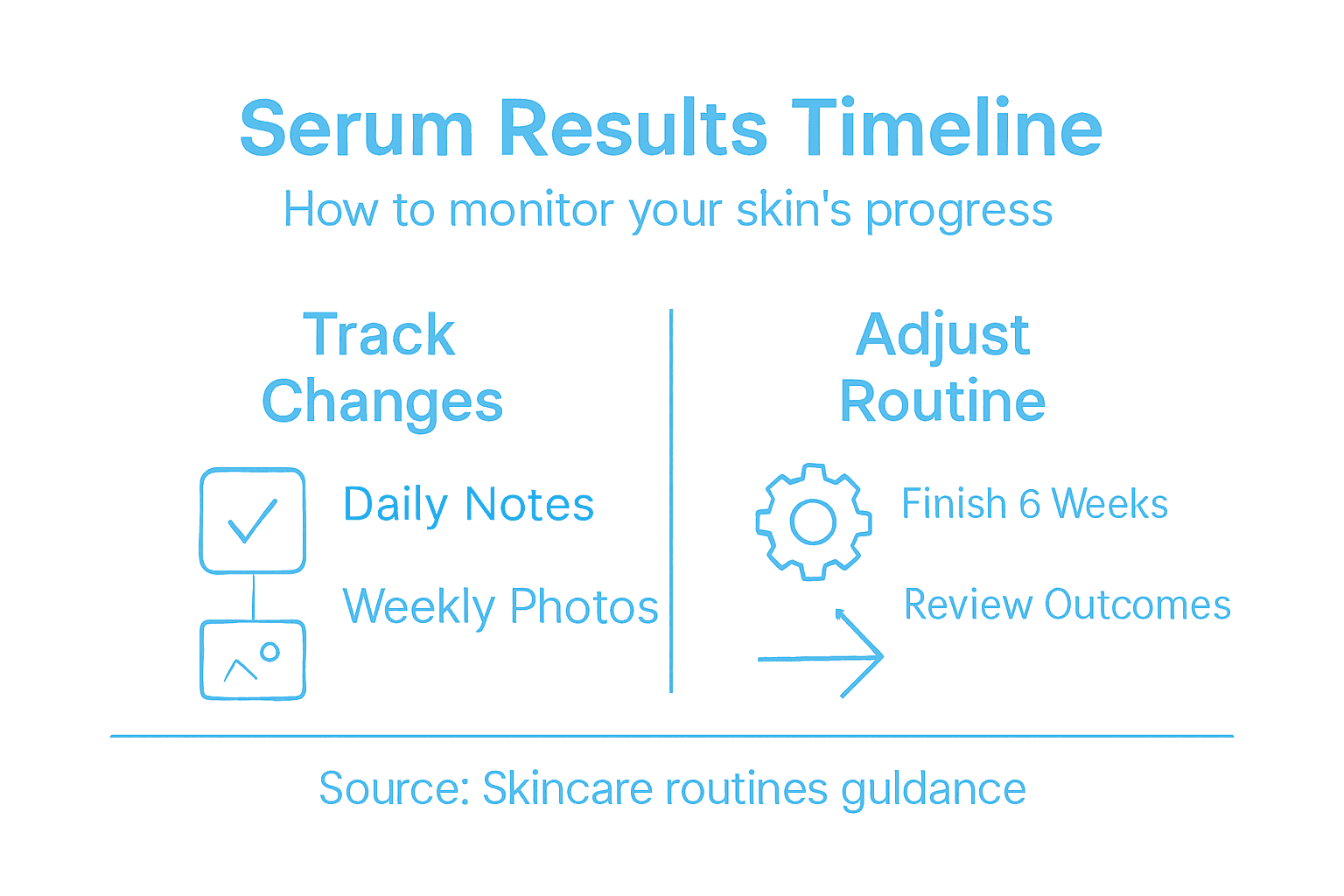
During these weeks, track specific improvements you want to see. Look for changes in skin texture, hydration levels, and overall brightness. Check if fine lines appear softer, if dark spots are fading, or if your skin tone looks more even. Take photos in consistent lighting to compare your progress objectively—sometimes improvements are subtle enough that daily observation misses them.
Pay attention to how your skin feels and looks daily:
- Does your skin feel more hydrated throughout the day?
- Are breakouts decreasing or improving?
- Does your complexion look brighter or more radiant?
- Are problem areas showing visible improvement?
- Are you experiencing any irritation or sensitivity?
If you notice undesirable reactions like persistent irritation, redness, or increased breakouts after 2-3 weeks, adjust your usage frequency first. Try using your serum 3-4 times per week instead of daily, or cut the amount you’re applying. Sometimes less is more, especially with potent active ingredients.
If reducing frequency doesn’t help, understanding how your skin reacts to ingredients may require discontinuing that serum and trying a different formula. Your skin’s tolerance matters more than sticking with a product that causes problems.
Patience and objective tracking reveal whether a serum truly works for your unique skin.
After 6 weeks, decide whether to continue, modify, or replace your serum. If you’re seeing real improvements and experiencing no irritation, keep going—you’ve found a winner. If results are minimal, consider whether you’re using it correctly or if a different ingredient profile might suit your skin better.
Pro tip: Keep a simple one-line journal entry each morning noting your skin’s appearance and how it feels, then review the full month at week four to spot patterns you might otherwise miss.
Unlock Radiant Skin with the Perfect Serum Routine
Struggling to find a serum that truly fits your unique skin type and concerns can be frustrating. This article highlights how crucial it is to assess your skin correctly, prepare your face for better absorption, and apply your serum with care to achieve visible, lasting results. If you want to move beyond guesswork and experience skincare designed with intention and efficacy, there is a solution tailored for you.
Discover how Passé Daisy® combines carefully selected active ingredients like niacinamide, vitamin C, and peptides in luxurious, cruelty-free formulas that honor your skin’s natural chemistry. Our offerings focus on nurturing hydration, combating dullness, and calming sensitivity, all while embracing ethical beauty standards.
Elevate your skincare ritual today by exploring our complete collection of effective serums and treatments at All Products - Skincare & Beauty | Passé Daisy.

Take control of your skin’s health and radiance now with Passé Daisy®. Visit https://www.passedaisy.com/ to find the serum that matches your skin’s unique needs and start seeing real, transformative results.
Frequently Asked Questions
What is the first step to using serums for healthy skin?
Start by assessing your skin type and specific concerns. Examine your skin in natural light to identify whether it’s oily, dry, sensitive, or a combination, and note any issues like fine lines, dark spots, or acne.
How do I prepare my face before applying serum?
Cleanse your face gently with a fragrance-free cleanser, then leave your skin slightly damp before applying serum. This method enhances serum absorption by allowing active ingredients to penetrate more effectively.
How should I apply serum for the best results?
Dispense 2-4 drops of serum onto your fingertips and gently pat it onto your skin using upward and outward motions. Focus on areas that need extra attention, and allow the serum to absorb fully before moving on to your moisturizer.
How long does it take to see results from using a serum?
You should give your serum at least 4-6 weeks to show potential results, as skin cell turnover takes time. Monitor specific improvements in skin texture, hydration, and clarity during this evaluation period.
What should I do if my serum causes irritation?
If you experience irritation, first try reducing the frequency of use to 3-4 times per week, or decrease the amount applied. If irritation persists after making adjustments, it may be best to discontinue use and try a different formulation.
How can I effectively track the results of my serum?
Keep a simple journal where you note your skin’s appearance and feel each morning. Review these entries weekly to recognize patterns and changes, allowing you to make informed decisions about your serum usage.
Recommended
Let customers speak for us
Their packaging is adorable and I’m literally obsessed with their vitamin c moisturizer.
One of my faves! Not too heavy & leaves my skin glowy/bright. The consistency wears perfect under makeup.

Absolutely love this serum! After a few weeks of consistent use, my lashes became longer and fuller, and my brows look much healthier. It’s gentle, easy to apply, and actually delivers visible results. Highly recommend! 💛
Absolutely love this serum! After a few weeks of consistent use, my lashes became longer and fuller, and my brows look much healthier. It’s gentle, easy to apply, and actually delivers visible results. Highly recommend! 💛

I’ve really enjoyed using this serum. It was easy to incorporate into my routine, and my lashes look healthier and fuller. I’m very happy with the results and would recommend it!
I absolutely LOVE this serum! After having a terrible accident with an eyelash curler that ripped out a huge chunk of my lashes, this stuff truly helped grow my lashes back longer and fuller! It is also does not irritate my eyes at all which is a huge plus! Totally worth it!

I’ve been using this serum for a little bit over a week and I have nothing but good things to say. There has been no irritation to my eyelids upon application and after, and I see a change in the fullness of my lashes already. I highly recommend.
I’ve been really enjoying this lash serum! It’s lightweight, easy to apply, and has become such a simple part of my nightly routine. I also love that it doesn’t feel sticky or heavy after application. The packaging is beautiful, and the overall experience feels really luxurious. I’m excited to keep using it and can’t wait to see even more results over time. Definitely recommend if you’re looking to support healthier-looking lashes!
I’ve been really enjoying this lash serum! It’s lightweight, easy to apply, and has become such a simple part of my nightly routine. I also love that it doesn’t feel sticky or heavy after application. The packaging is beautiful, and the overall experience feels really luxurious. I’m excited to keep using it and can’t wait to see even more results over time. Definitely recommend if you’re looking to support healthier-looking lashes!
I am absolutely in love with the Celestial Age-Defy Peptide Serum! Finding an anti-aging product that actually delivers visible results can be a challenge, but this serum is incredible. After just two weeks of using it morning and evening, I can already see a wonderful difference. My skin feels noticeably smoother, firmer, and deeply hydrated. It does an amazing job at softening fine lines and giving the skin a healthy, youthful glow. The texture is lightweight, absorbs beautifully, and leaves the skin feeling great. Highly recommend!

I’ve been using the Multi Peptide Eyelash Serum as part of my routine, and one of the things I like most is that it’s prostaglandin-free, vegan, and cruelty-free. The applicator is very precise, making it easy to apply to both my lashes and brows. So far, I’ve really enjoyed using it and I’m looking forward to seeing my results with continued use. Overall, it’s been a great addition to my beauty routine.
Just started using this serum and I cannot say enough good things about it. It’s so easy to add to my daily routine and really helps extenuate my natural features. Will be purchasing again!! 5 stars easy!!